

|
|
|
|
|
|
|
|
|
|
 |
How to Practice Part III by Nick Anhyzer
|
|
As we begin to wrap up this series, we'll get into the long drives and the specialty shots that separate the polished tournament player from the masses of people who have some good shots but never seem to score well on the golf course. Part III will introduce my favorite shot, the big anhyzer. Part IV will cover the alternatives to the backhand shot, and will wrap up with the aspect of the game that's most critical to scoring and hardest to teach - putting.
TURNING THE DISC TO THE RIGHT
There aren't hundreds of different ways to throw a disc backhand. There are really only a handful. Some are harder to master than others-namely making the disc move right and far. See, course designers are conscious of the fact that most people out there are right handed. They know that the safest and most consistently accurate shot in the game is the backhand hyzer shot. So they effectively take that line away from you off most tees on all but the easiest of courses. They also know that most people like to drive the disc at a height somewhere between two feet off the ground and straight up and over a fifty foot tree. So they don't let you throw the right trajectory either- unless you can make your disc turn right. Next time you play your local course take stock of how many of the holes have trees blocking the right side of the fairway or placed in front of the basket on the right side. Chances are there's an opening for a hyzer, but you have to go up and around the trees or through a narrow gap.
If after surveying your local course it seems like most holes you play are approachable from the right, than you won't be ready to beat people who have learned to play on harder courses. If you look at your course and it looks like there's no route from the right OR the left?-that means your course is pretty tough.
A southpaw has a huge advantage in this game, but unless you're willing to throw like an eleven year old girl for a few months while you try to master the left hand, you'll probably want to stay a righty. There are a few different ways to make the disc take a right turn AND cover a lot of ground. If you ever go to a tournament, you'll be able to tell a top player by his ability to pull off at least two of these throws AT WILL. Regardless of how much pressure he's under or how many thousands are whispering in the gallery or how many millions are watching on pay-per-view and the internet and in bars around the globe (hey, it could happen), usually there's one style that is his "go to" shot off the tee. If he's playing a hole with no hyzer route available, these are the four shots to choose from:
-BigAnhyzer
-Sidearm
-Roller
-Overhand
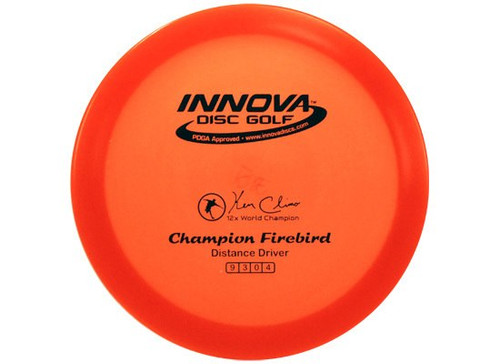
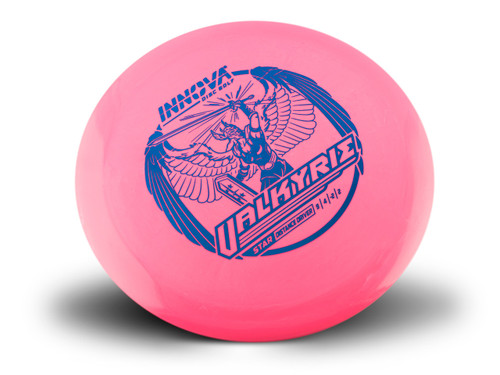
Big Anhyzer- This is the big helix drive that everyone loves to watch. The huge airshot that you see guys using in the long distance contests. They usually throw a moderately overstable disc like a CE Eagle or a Z-cyclone on this shot. In July at the AmWorlds in Miami, Mark McAlister won the distance contest with a throw of 510 feet in the final round. Earlier in the contest Thomas Kocurek threw one 516 feet. I wasn't there but I'd bet they all threw huge anhyzer shots that rode the wind for what probably seemed like hours. If you've got a lot of speed and snap you can release the disc flat and it will turn over naturally. Or, if you're a mere mortal, or if you're throwing a disc like a CE Firebird, CE Valkrie, an old Viper, or a Z-Reaper you'll have to horque it over more. If your technique isn't sound you simply won't be able to keep the disc turning over for long enough to get maximum length. This is the shot that really tells you whether you're throwing with your weight moving forward as opposed to "falling back" and relying on just your arm. Once you master this shot you'll start to be able to release a disc like a Roc at a slight hyzer angle and it will straighten out nicely for you.
If you've ever played tennis, I would compare throwing a hard anhyzer with hitting a high backhand volley. It involves pivoting your body so the disc leaves your hand with the outer edge up and moving slightly down through release. You'll have to take the disc back higher and with as big a turn as you can manage. Make sure your back leg is loaded up and then gradually uncoil with a good follow through after you release. You have to have a different image of the flight of the disc than when you throw a hyzer shot. Remind yourself of the angle of release and the line that you need to start on. Your body should be turning so hard that it naturally brings your left side around after the throw. Know your limitations when trying this shot-the disc will eventually come back to the left so make sure you're not overestimating your ability to turn it over. Pay attention to where the disc will end up if it stops turning over sooner than you planned. That may just be where you have to go looking for it. Bear in mind that it's easier to turn the disc over into the wind, and with a tailwind the disc will want to hyzer.
Here's a good photo of a top amateur after releasing a huge anhyzer drive.

FOR THE INTERMEDIATE PLAYER:
If you can't throw a backhand 280 feet(under normal conditions) than I would recommend using a Stingray or a Cobra for this shot. The Stingray should be your best friend on drives if you need to make it turn right and you don't have a lot of snap. The Cobra is proabably better for throwing into the wind and tends to drop down at the end of its flight rather than to the left. That helps if you don't release it at the right angle. Another option is to use a broken in XL or a SE Leopard so they'll fly more like a Stingray when thrown fast. The SE Leopard is especially good for newer players when broken in-I'd recommend it as your main driver to anyone who can't throw 300 feet. In a later article I'll go into more depth about disc selection. Your decisions will all be based on how much snap and speed you put on the frisbee.
The slower you throw the disc the harder it is to nail the big anhyzer. You have less room for error on the release angle, because if you release it without the outer edge high enough and it's going slowly, it will not turn over by itself. On the other hand if you throw a Cobra with too much anhyzer angle because you're afraid of not turning it over, it will dive into the ground 100 feet in front of you. Eventually when you develop more power you'll encounter a new set of problems like snapping the disc too much, but for now focus on getting the disc to fly right but eventually come left at least a little. You need the extra hang time that comes from the helix flight pattern. If your disc is turning over a lot but won't flatten and come back left, than you're throwing more of a cut shot-which are good for approaches around obstacles but aren't going to give you enough length off the tee most of the time.
HOW TO PRACTICE THE BIG ANHYZER DRIVE:
The key is to not hurt yourself, and to maintain good form. You do this by using moderation when you practice. Don't take 10 overstable discs and just heave them one after the next. For each drive you throw you should make at least one "practice throw". Like golfers do, a disc golfer needs to go through the motion of his throw completely but at a reduced speed. I think it's even more important but also more neglected in disc golf. What you want to do is throw the disc slowly without letting go, but be sure to follow through. Gradually you'll be able to do it fast enough to hear a "swish" through the release zone. That's a good indication that you're accelerating the disc. By practicing the motion once or even twice between throws you will start to notice your bad habits because you won't by distracted by the outcome of the throw. Chances are you will notice that you're not taking the disc through long enough of a route to generate speed. It's O.K. to bend a little at the elbow as long as your arm is able to swing through and extend during the release as a result of a good body turn. Most new players get their limited power from bending their arm and pushing out from their chest. Be sure you're turning to the side a lot and really pivoting hard. Try to throw at least 20 big drives each time you practice.
Stay tuned to everythingdiscgolf.com for part IV of this article.
A MESSAGE FROM NICK ANHYZER, a.k.a. "BigAnhyzer":
This sport of ours is on the verge of breaking loose and becoming mainstream. Local tournaments are starting to fill up weeks before the event. New players are getting heavily involved in the game at an accelerated rate. New courses are being built almost at the rate of one per day across the world. Unfortunately one man won't be around to see disc golf go mainstream. That man, "Steady" Ed Headrick passed away on August 12 at his home in California.
Ed sufferred a stroke two weeks earlier at the Am Worlds in Miami, FL. Ed not only invented the sport of disc golf through his patent of the "pole hole"(our modern basket), he was a pioneer in disc sports in general. He installed most of the disc golf courses that were built in the first ten years of the sport. An inventor and businessman, Steady Ed designed and was the first to manufacture the modern frisbee while working for Wham-O!, which continues to own the trademark "frisbee". Ed created the PDGA, and later passed it on to the members to operate. He is PDGA #0001, and there will never be another like him.
|
|
 |
|
|
Disc Golf (also known as "Frisbee Golf" and "Folf" or "Frolf" and even "Disk Golf") is played much like traditional golf. Players throw flying discs (golf discs or Frisbees®) from a tee area toward a Disc Golf Basket or Target. The object: complete the hole by putting your golf disc in the basket in the fewest number of throws. Formalized in the 1970s, disc golf is governed by the Professional Disc Golf Association (PDGA). There are more than 1,750 disc golf courses worldwide, with over 1,400 in the USA. |
|
Copyright © 2007 EverythingDiscGolf. All Rights Reserved. About Us | Terms of Use | Privacy Policy | Site Map |
|
|
 |
|